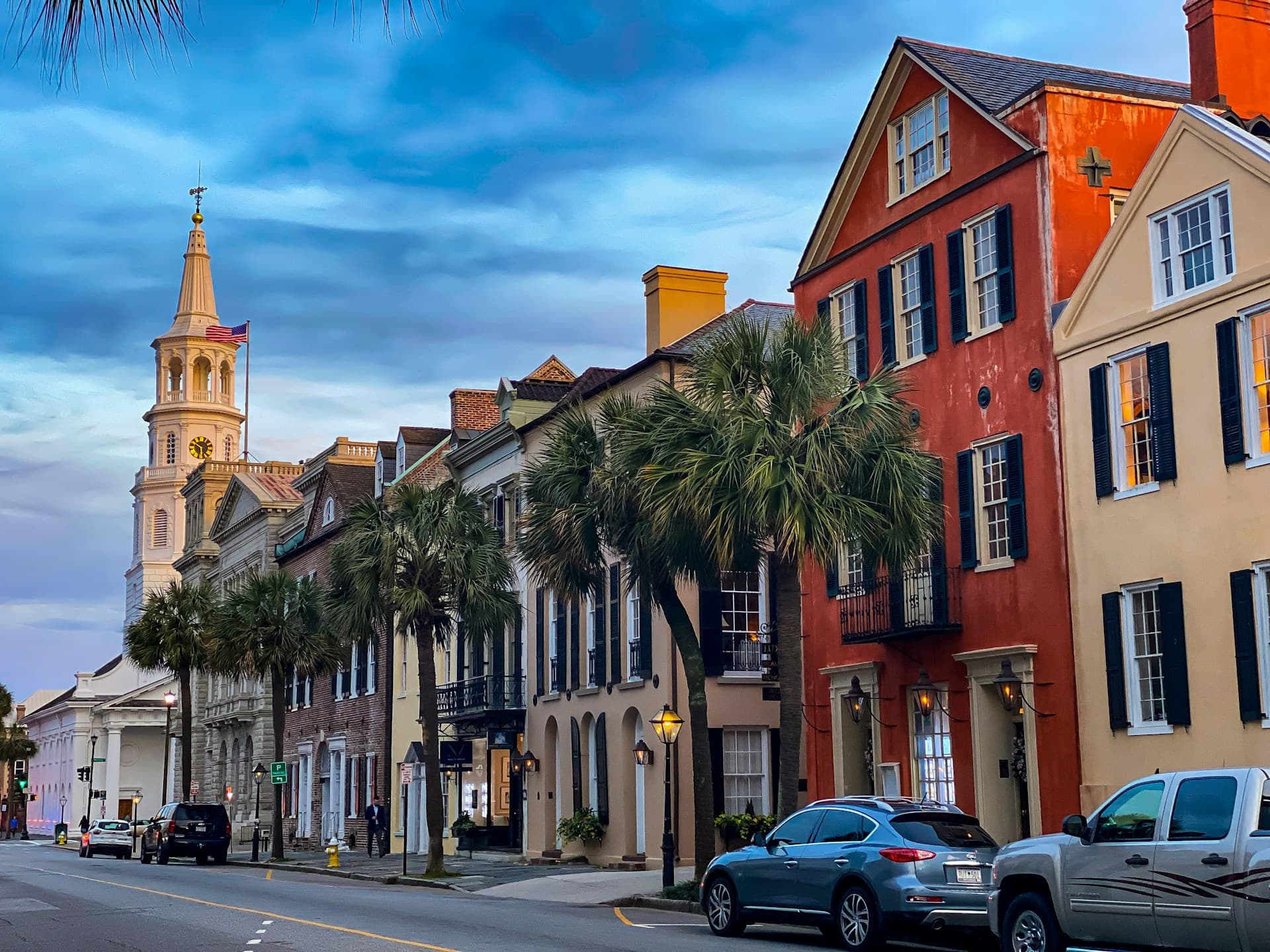
Shipwatch Villas is a 104-unit oceanfront condominium at 7600 Palmetto Drive inside Wild Dunes Resort on Isle of Palms. Built in 1984 across four reinforced-concrete buildings, the complex survived Hurricane Hugo and decades of coastal exposure, emerging as one of Wild Dunes' most established beachfront addresses. Full-ownership 3BR units trade between ~$1.3M and $1.8M. An active short-term rental market, a fractional ownership program, and a fee structure that bills insurance separately from monthly regime fees make Shipwatch a complex but compelling option for second-home buyers and investors.
Quick Facts
- Location: Wild Dunes Resort, northeastern end of Isle of Palms
- Address: 7600 Palmetto Dr, Isle of Palms, SC 29451
- Total units: ~104 (four buildings: A, B, C, D)
- Unit types: 2BR/2BA flats, 3BR/3BA flats, 3BR/3BA two-story penthouses
- Size range: 1,084 - 1,616 sqft
- Price range: ~$1.3M - $1.8M (full ownership 3BR); fractional 1/13th shares at $120,000 - $130,000
- Year built: 1984 (Phase I: Buildings A & B); 1985 (Phase II: Buildings C & D)
- Construction: Reinforced concrete and steel with stucco exterior, metal roof
- Regime fee: ~$846/month (3BR, early 2026; varies by unit size)
- Insurance assessment: Billed separately, annually (~$2,400 - $3,700/year)
- WDCA master assessment: $983/year (2026)
- Flood zone: VE (BFE 11 ft NAVD88)
- Parking: Covered drive-under parking, 2 spots per unit
- Pool: Private oceanfront pool (seasonal, April - October)
- STR eligible: Yes — 7+ units actively listed across 5+ management companies
- Gated: Yes — Wild Dunes three-gate security system
Building History: Pre-Hugo Concrete on the Beach
Shipwatch Villas was constructed in two phases beginning in 1983, during a period of intensive oceanfront development at Wild Dunes Resort. The initial Master Deed was executed on April 24, 1984, establishing the horizontal property regime for Buildings A and B. A Phase II amendment on October 30, 1985 added Buildings C and D, completing the four-building complex.
The timing is significant. Shipwatch went up while Wild Dunes was simultaneously commissioning shoreline monitoring studies to track beach behavior near the Dewees Inlet reach. A 1983 engineering study titled "Shoreline stability, Shipwatch at Wild Dunes" was produced during construction — the building was a recognized coastal engineering concern from its first year.
The Storm That Tested the Structure
Hurricane Hugo made Category 4 landfall on the night of September 21-22, 1989, driving storm surge to approximately 15.5 feet above mean sea level along the Isle of Palms beachfront. Nearly every structure on the island suffered damage; more than 200 were destroyed.
Post-Hugo engineering assessments drew a clear distinction between building types: fully engineered mid-rise and high-rise buildings (reinforced concrete condominiums, hotels, offices) showed no damage to main structural systems, though roofing, wall panels, and cladding failures were common. Wood-framed and marginally engineered structures fared far worse.
Shipwatch's reinforced concrete and steel construction placed it in the engineered category. The complex sustained damage — consistent with every structure on the island — but its structural frame survived. The association's governing documents and operations continued without interruption through the recovery period.
Four Decades of Capital Renewal
In the decades following Hugo, Shipwatch has completed substantial capital improvements funded through special assessments:
- Metal roof replacement across all four buildings
- Storm-rated windows and balcony doors
- Elevator modernization in all four buildings
- Exterior stucco restoration
- Pool renovation with travertine decking and a children's pool
The work was completed through a series of targeted assessments rather than a single large-scale project — consistent with the board's stated preference for capital assessments over building large reserve balances.
In 2025, the HOA initiated a comprehensive restatement of governing documents, integrating 11 Master Deed amendments and 20 by-laws amendments into a consolidated set. The restatement focuses on modernizing insurance language, claims-handling clarity, and electronic voting procedures.
Where the Market Stands
Shipwatch trades in the ~$1.3M-$1.8M range for full-ownership 3BR units, with pricing driven by unit type (flat vs. penthouse), floor level, and renovation quality. No 2BR units were actively listed as of early 2026, and 2BR market data is effectively unavailable at current-cycle pricing.
Pricing by Unit Type
| Unit Type | Sq Ft | Price Range | $/Sq Ft |
|---|---|---|---|
| 3BR flat | ~1,250 | ~$1.3M - $1.45M | ~$1,036 - $1,160 |
| 3BR flat (variant) | ~1,322 | Similar range | -- |
| 3BR penthouse/townhome | ~1,616 | ~$1.8M | ~$1,114 |
| 2BR flat | ~1,084 | No current listings | -- |
Three of four full-ownership listings were under contract as of March 2026, indicating strong absorption. The fourth — a 3BR flat at $1,295,000 — remained active after approximately 7 weeks on market.
How Values Have Moved
Shipwatch values have more than doubled since the pre-COVID era. Units that sold in the $400-$460/sqft range in 2018-2019 now trade at ~$1,000-$1,160/sqft. The post-COVID surge peaked around $850-$950/sqft in 2021-2022, then continued edging higher through 2024-2026.
Property Taxes
Annual property taxes depend heavily on owner-occupancy classification under South Carolina law:
| Scenario | Assessment Ratio | Estimated Annual Tax (at ~$1.4M) |
|---|---|---|
| Non-owner-occupied (6%) | Full 236.2 mills | ~$19,800 |
| Legal residence (4%) | ~93.7 effective mills | ~$5,250 |
Isle of Palms is in Charleston County Tax District 24 with a combined millage of 236.2 mills (2025). The school operating component (142.5 mills) is exempt for qualifying primary residences, creating a gap of roughly $10,000+ per year per $1M of appraised value between the two classifications.
Most Shipwatch buyers are second-home or investment owners paying the 6% rate. Tax amounts displayed on listing portals reflect prior owners' assessed values — a new buyer purchasing at current market prices should expect reassessment.
Looking at Shipwatch Villas?
We can tell you what is actually available, how current asking prices compare to recent sales, and which units deserve a closer look.
Unit Types and What to Expect by Layout
Shipwatch offers three primary configurations across all four buildings:
The 2BR Entry Point (~1,084 sqft)
The smallest layout, with two bedrooms, two baths, and partial wrap-around balconies. These occupy floors 1-3 and represent the most affordable path to full Shipwatch ownership. No 2BR units were actively listed as of early 2026.
The 3BR Workhorse (~1,250 sqft)
The most common configuration and the dominant listing type. Three bedrooms, three full baths, partial wrap-around balconies with ocean and/or golf course views depending on building and floor position. A slightly larger 3BR variant (~1,322 sqft) exists in at least Building A.
The Penthouse: Two Stories of Oceanfront (~1,616 sqft)
Two-story units exclusively on the 4th floor of all four buildings. The main level contains the living area, kitchen, and a guest bedroom. An interior staircase leads to the upper level with the primary suite and an additional bedroom. Multiple private balconies face both the ocean and the Links Golf Course — penthouses are the only Shipwatch units with dual-exposure sunrise and sunset views.
Building Layout
All four buildings run parallel to the beach, and all are oceanfront. Buildings A and D sit at the outer edges of the complex, where corner and end units offer the widest views. Buildings B and C are positioned behind the community pool.
Unit numbering follows a consistent pattern: the first digit indicates the floor (1-4), the last digits indicate position within the complex, and the letter identifies the building (A, B, C, or D).
Parking is covered drive-under style in each building, with two spots per unit. Each building has a glass-enclosed exterior elevator.
HOA Fees and the Full Cost of Owning at Shipwatch
Shipwatch has a distinctive multi-layer fee structure that differs from most Wild Dunes condos. Understanding each layer is essential — comparing only the monthly regime fee to other buildings creates a misleading picture.
Layer 1: Shipwatch Regime Fee (Monthly)
The monthly regime fee is set annually by the board and allocated per the Master Deed schedule based on unit size and location. As of early 2026, the regime fee runs ~$846/month for 3BR units (~1,250 sqft). The fee varies by configuration — 2BR and penthouse amounts differ. Request the current fee schedule in the resale package.
What the regime fee covers:
- Water and sewer
- Cable TV and internet
- Pest control
- Building and grounds maintenance
- Elevator service and maintenance
- Pool, deck, and furniture maintenance
- On-site property manager (full-time)
- Covered parking maintenance
- Building lighting and common-area electrical
- Storm preparation and alerts
- Seasonal security (summer pool and parking monitors)
What the regime fee does NOT cover:
- Building insurance (billed separately — see Layer 2)
- Electricity for individual units
- Interior insurance (HO-6)
- Special assessments
Layer 2: Insurance Assessment (Annual)
This is the key distinction from most Wild Dunes buildings. Shipwatch removed insurance premiums from the monthly regime fee and bills them as a separate annual assessment, due January 1 each year. The association's insurance program covers full replacement value for buildings and equipment, including wind/hail and flood damage, plus liability and directors coverage.
Oceanfront Wild Dunes regime insurance assessments typically range from ~$2,400 to $3,700 per year, but the actual amount varies by unit size and policy-year costs. Verify the current assessment in the resale package.
Layer 3: WDCA Master Assessment (Annual)
The Wild Dunes Community Association charges $983 per dwelling (2026), due January 31. This covers community-wide infrastructure: security gates and 24-hour personnel, private roads, bike paths, lagoons, drainage systems, and the Property Owners' Beach House. Properties used for short-term rentals pay an additional $100 annual rental access fee.
Transfer Fees at Closing
| Fee | Amount | Recipient |
|---|---|---|
| WDCA Real Estate Transfer Fee | 1% of purchase price | WDCA (half to Beach Maintenance Fund) |
| Shipwatch transfer fee | 0.5% of purchase price (or $5,000, whichever is greater) | Shipwatch regime working capital |
On a $1.4M purchase, transfer fees total ~$21,000+ — a material closing cost.
Total Annual Carrying Cost (3BR Example)
| Line Item | Estimated Annual Cost |
|---|---|
| Regime fee (~$846/mo) | ~$10,150 |
| Insurance assessment | ~$2,400 - $3,700 |
| WDCA assessment | $983 |
| WDCA rental access fee (if STR) | $100 |
| Property taxes (6%, ~$1.4M) | ~$19,800 |
| Individual HO-6 + flood contents | Varies |
| Total before HO-6/flood | ~$33,400 - $34,700 |
Regime fees and insurance assessments are set annually by the board. Verify current amounts in the resale package before underwriting.
Rental Income: What Owners Actually Net
Short-term rentals are permitted and widely active at Shipwatch. There is no mandatory rental pool — owners choose their own management company and control their own rental program.
Who Manages Here
At least seven units are actively listed across five or more management companies:
- Charleston Coast Vacations (Dunes Properties)
- Sweetgrass Properties
- Vacasa
- Lowcountry Vacation Properties
- AvantStay (Beachside Vacations)
- Island Realty
The management model is fully decentralized. Each unit operates independently with its own STR license, pricing strategy, and booking channels. None of these companies are affiliated with the CoralTree resort program — Shipwatch owners who rent independently do not receive resort amenity access for their guests (a Sportscard purchase is required for limited access).
Gross Rental Income
3BR units generate ~$100,000-$127,000 in gross annual rental income, depending on availability, renovation quality, and management strategy. One 3BR unit grossed ~$105,000 in 2025 while the owners also used it during the year; the same unit's income potential is cited at ~$127,000 with full availability.
2BR rental income varies — request actual performance data from your management company.
Nightly Rate Ranges
| Season | 3BR Rate Range | 2BR Rate Range |
|---|---|---|
| Peak summer (July) | ~$700 - $860/night | -- |
| Shoulder (April) | ~$300 - $375/night | ~$255 - $310/night |
| Off-season (Dec-Feb) | ~$184 - $292/night | -- |
Average nightly rates across the year run ~$367 for a 3BR unit.
Rental Rules and Restrictions
- Minimum stay: 2-7 nights depending on season
- Minimum renter age: 25 (per management company policies)
- Pets: Prohibited for all rental guests (Wild Dunes community-wide rule; $100-$250 escalating fines for violations)
- Smoking: Prohibited in all units
- BBQ grills: Not permitted on property
- Quiet hours: 10pm - 8am
- Parking: 2 covered spots per unit; trailer and motorcycle parking prohibited
- Pool season: April through October only
- E-bikes: Prohibited for short-term rental guests per WDCA SOPs
Rental Licensing
Each unit requires an individual City of Isle of Palms rental business license. The annual license fee is based on prior-year gross income: $450 for the first $2,000, plus $4.60 per additional $1,000. At $105,000-$127,000 gross, the license fee runs ~$924-$1,025 per year.
The combined Isle of Palms lodging tax is 14% (7% state + 7% local/county). Taxes are typically collected from guests and remitted by the management company or booking platform.
What Gross Income Does Not Tell You
Gross-to-net varies widely depending on management company commission, cleaning cost structure, channel mix, and maintenance. Each company negotiates management fees individually with property owners. Full-service vacation rental management in this market typically runs 15-25% of gross rental income.
Additional owner expenses include the regime fee, insurance assessment, WDCA fees, property taxes, HO-6 insurance, maintenance/repairs, and furnishing costs. Build a property-specific pro forma rather than relying on gross income figures alone.
Flood Zone and What It Means for Insurance
FEMA Designation
All four Shipwatch buildings sit within FEMA Zone VE with a Base Flood Elevation of 11 feet (NAVD88). VE is a coastal high-hazard area subject to wave action and storm surge — the highest-risk residential flood zone designation.
The VE/AE boundary is approximately 45-50 meters inland (west) of the buildings. Everything on the ocean side of that line — including the entire Shipwatch footprint — carries the velocity-wave-action designation.
Why the Elevation Matters More Than the Zone
Shipwatch is built on a raised pillar/post/pier foundation with covered drive-under parking at ground level and living spaces on elevated floors. This design meets VE zone construction requirements and means living spaces sit well above the BFE. The primary flood exposure for individual unit owners is catastrophic surge exceeding the first-floor living elevation — not routine tidal or rainfall flooding.
Insurance Structure
Shipwatch carries a master building insurance policy funded through the annual insurance assessment billed to owners. The association's published materials describe the program as covering full replacement value for buildings and equipment, including wind, hail, and flood damage.
What owners need separately:
- HO-6 (walls-in) policy: Covers interior finishes, personal property, and betterments beyond original builder-grade materials
- Loss assessment coverage: Recommended — if the master policy is exhausted after a major storm, the HOA can assess owners for the shortfall
- Individual flood contents policy: Optional for elevated units where living spaces are well above BFE; more relevant for ground-floor exposure scenarios
The Wind/Hail Deductible Trap
South Carolina coastal wind/hail and named-storm deductibles are commonly structured as a percentage of insured value — typically 2%, 3%, or 5% on Isle of Palms policies. On a $1.4M unit, a 5% named-storm deductible means $70,000 out of pocket before coverage kicks in. In a hurricane, both the wind deductible and flood policy deductible can be triggered by the same event. Confirm your deductible structure with your insurance agent and plan cash reserves accordingly.
Risk Rating 2.0 and Rising Premiums
FEMA's Risk Rating 2.0 methodology prices NFIP premiums based on property-specific variables (distance to coast, elevation, replacement cost) rather than zone designation alone. Annual NFIP premium increases are capped at 18% for primary residences and 25% for non-primary residences until full actuarial rates are reached. Non-primary-residence policies also carry a $250 annual HFIAA surcharge (vs. $25 for primary residences).
Isle of Palms participates in FEMA's Community Rating System (CRS), providing a 25% discount on NFIP premiums. The City enforces a freeboard requirement of BFE + 1 foot for new construction to maintain CRS eligibility.
Private Flood Insurance
Some condo associations in the Charleston coastal market have moved to private flood carriers (Neptune, Lloyd's syndicates, Wright National) for higher limits and potentially lower premiums than NFIP. Whether Shipwatch's current master flood coverage is NFIP or private should be confirmed in the resale package.
Amenities: What's Included and What Costs Extra
Shipwatch-Exclusive
- Oceanfront pool — one of the largest community pools in Wild Dunes, seasonal (April-October), with travertine decking
- Children's pool — separate shallow pool
- Playground — on-site, dedicated to Shipwatch residents
- Observation deck — elevated ocean views
- Beach gazebo — beachfront common area
- Landscaped beach access paths — direct walkways to the sand
- Covered parking — drive-under garage in each building, 2 spots per unit
- Glass-enclosed exterior elevators — one per building
- On-site property manager — full-time staff
Pool access is restricted to Shipwatch owners, their guests, and in-house rental guests. Wristband enforcement applies during peak season. Shipwatch residents do not have access to Wild Dunes resort pools (Grand Pavilion, Sweetgrass, Boardwalk) without a separate Club membership or Sportscard.
Wild Dunes Community Amenities (WDCA Fee)
- Property Owners' Beach House — exclusive to property owners and their guests (not rental guests)
- Private roads, bike paths, and walking trails
- Lagoon system (fishing permitted; swimming prohibited)
- 24-hour gated security
Wild Dunes Club Amenities (Separate Membership Required)
Resort pools, the fitness center, and dedicated tennis/pickleball programs require a Club membership:
| Tier | Initiation | Monthly Dues | Key Access |
|---|---|---|---|
| Swim | $10,000 | $139/mo | Resort pools, beach services |
| Racquets | $10,000 | $336/mo | Tennis, pickleball, pools |
| Signature (Golf) | $50,000 | $637/mo | Unlimited golf, all amenities |
Golf courses and restaurants are open to non-members on a pay-per-use basis. Memberships are non-transferable — when you sell, the membership terminates.
For owners who rent their units, a Sportscard (~$2,000+/year) allows rental guests limited access to the Swim Center pool, with daily fees for fitness and hourly fees for tennis. Without a Sportscard, rental guests have access only to the Shipwatch community pool.
Getting There and Getting Around
Shipwatch sits at the oceanfront edge of Wild Dunes, at the northeastern end of Isle of Palms — a barrier island connected to Mount Pleasant via the IOP Connector (SC-517) and Palm Boulevard.
Drive Times
| Destination | Distance |
|---|---|
| Downtown Charleston | ~18 miles (30-40 min) |
| Charleston International Airport | ~25 miles (35-45 min) |
| Mount Pleasant (Town Centre) | ~12 miles (20-25 min) |
| IOP County Park | ~3 miles |
| Boone Hall Plantation | ~11 miles |
| Fort Sumter departure point | ~14 miles |
Getting Through the Gate
The Wild Dunes gatehouse is approximately 1 mile from Shipwatch via Palm Boulevard. Owners enter through the Main Gate (Gate #1, open 24/7) or Palm Gate (Gate #2, posted hours). Rental guests receive access credentials through their management company — the Main Gate does not issue day passes to guests of rental guests, which means all guest credentialing must be arranged through the management company in advance.
The Grand Pavilion area (restaurants, boardwalk, resort pool) is approximately a 20-minute walk or short drive from Shipwatch.
Beach Context
Isle of Palms beaches are public, but Wild Dunes provides private beach access paths for residents and guests. The Shipwatch stretch of beach is part of the "front beach" zone that has been the focus of recurring nourishment projects since 2008 (see Beach Nourishment below).
Fractional Ownership: The 1/13th Share Option
Shipwatch has an active fractional ownership program where individual units are divided into 1/13th deeded shares. Each share provides approximately 4 weeks per year (one per season) on a Sunday-to-Sunday rotation.
What a Fractional Share Costs
- Current listing prices: $120,000-$130,000 per 1/13th share
- Recent sale: A share sold for $99,000 in October 2024; another sold for $53,000 in October 2020
- Monthly cost: ~$250/month covers all expenses (HOA, maintenance, furnishings, taxes)
- Restrictions: No pets, no short-term rentals of fractional weeks
- Financing: Cash only — traditional lenders do not finance fractional interests
- Week exchange: Interval owners may exchange weeks within their partnership group
Why Full-Ownership Buyers Should Care
Fractional transactions ($53,000-$130,000) appear in the same portal "recently sold" data as full-ownership sales ($1.3M+). Automated valuations and cursory price analyses that include fractional sales will be significantly distorted. Any comp analysis must filter out fractional transactions.
The presence of fractional ownership also contributes to Shipwatch's warrantability challenges for conventional financing — fractional/interval features are flagged in Fannie Mae's ineligible project criteria.
Beach Erosion: The Recurring Cost of Oceanfront at Wild Dunes
Shipwatch sits in the most erosion-sensitive section of the Wild Dunes shoreline. The northeastern end of Isle of Palms is strongly influenced by the Dewees Inlet ebb-tidal delta and shoal-bypass system, which produces dramatic but cyclical shoreline changes — periods of accretion when offshore shoals attach, bookended by erosion episodes that can remove significant sand volume.
What Owners Have Paid
Shipwatch is within the "424 front-beach owner" group (properties between Shipwatch and Ocean Club) that has been assessed for beach restoration work:
- 2008: A $9.9 million beach nourishment project was completed, with front-beach owners contributing $988,000 (~$2,330 per ownership interest). WDCA assessed an additional $1,500 per dwelling community-wide.
- 2012 and 2014-2015: Shoal management projects moved sand within the reach, partially funded by remaining 2008 project funds.
- 2017-2018: A major offshore nourishment cycle (~$12M+ total) included private stakeholder contributions estimated at ~$2,340 per assessed property.
The Next Assessment Is Coming
The City of Isle of Palms is actively planning a $25-$30 million beach nourishment project for the north and south ends of the island. Bids were received in March 2026, with contractor selection expected in April 2026. The Wild Dunes share under the published cost model (55% Wild Dunes / 45% City for north-end work) implies roughly $4,000-$5,000 per dwelling in a no-grant scenario, though state and federal grants could reduce this significantly.
Shipwatch owners should budget for a potential WDCA beach nourishment special assessment within the next 1-2 years, consistent with the recurring historical pattern.
Financing: Not a Standard Mortgage
Shipwatch presents several warrantability barriers for conventional mortgage financing:
Not FHA or VA approved. Shipwatch does not appear on HUD's FHA-approved condominium list or the VA's accepted condo list. No Wild Dunes condo except Yacht Harbor Villas (6600 Palmetto Drive) carries VA acceptance, and no IOP condo has ever been FHA-approved. FHA Single-Unit Approval is theoretically available but unlikely to succeed given the characteristics below.
Why conventional lenders walk away:
- Fractional ownership — even a few fractional units trigger Fannie Mae's ineligible project screens for timeshare/interval features
- High STR activity — pervasive short-term rental operations across multiple management companies can push underwriters toward a "primarily transient" characterization
- Non-owner-occupied concentration — the majority of units are investment or vacation properties assessed at the 6% non-owner-occupied tax rate
- Transfer fee covenants — the 1% WDCA RETF and 0.5% Shipwatch transfer fee require lender review for FHFA compliance
The realistic financing path: Portfolio or non-QM lenders with 20-30% down payments and interest rates 1-2+ percentage points above standard conventional rates. Cash reserves of 6-12 months PITI are commonly required. Fractional shares are cash-only.
Honest Assessment
Who Buys Here
Second-home buyers who want an oceanfront 3BR in a gated resort with direct beach access and strong rental income potential. Investors comfortable with non-warrantable financing and a multi-layer fee structure. Fractional buyers looking for 4 weeks of annual beach time at a fraction of full ownership cost.
Buy Here If
- You want reinforced-concrete oceanfront construction that survived Hugo — not a wood-frame beach house
- You prefer a fee structure where insurance is transparent and separate rather than bundled into an opaque monthly number
- You value the ability to choose your own rental manager and control your own income strategy
Look Elsewhere If
- You need FHA, VA, or conventional Fannie Mae financing — Shipwatch is not warrantable
- You want resort pool access included in your fees — Shipwatch owners use the Shipwatch pool only (Club membership starts at $10,000 initiation + monthly dues for pool access)
- You are uncomfortable with a building where fractional shares trade alongside full-ownership units, creating comp distortion and governance complexity
The insurance billing structure is the thing most buyers miss. Shipwatch's monthly regime fee looks lower than comparable Wild Dunes buildings like Seascape (~$1,189/month) or Summerhouse (~$1,060/month), but those buildings typically bundle master insurance into the monthly number. Shipwatch bills insurance separately as an annual assessment — potentially adding ~$2,400-$3,700/year on top of the regime fee. When you normalize for insurance, total carrying costs are in the same general range. Compare apples to apples by looking at total annual cost, not monthly regime fee alone.
Selling in Shipwatch Villas?
We can help you price against competing units, position around HOA and financing issues, and plan a listing strategy that reflects how buyers actually evaluate this building.
How Shipwatch Compares to Other Wild Dunes Condos
| Complex | Units | Unit Types | Price Range | Regime Fee | Key Difference |
|---|---|---|---|---|---|
| Seascape Villas | 50 | 2-3BR (1,252-1,801 sqft) | ~$1.1M - $2.5M | ~$1,189/mo | Insurance bundled in regime fee; similar oceanfront pre-Hugo construction |
| Summerhouse Villas | 55 | 2-4BR (1,235-1,765+ sqft) | ~$1.0M - $1.7M | ~$1,060/mo | Recently completed full structural renovation; wider bedroom range; AE flood zone |
| Ocean Club | 102 | 3-4BR (1,965-2,810 sqft) | ~$1.5M - $2.35M | ~$1,180/mo | Largest units in Wild Dunes; highest carrying costs; 2% regime transfer fee |
| Port O'Call | ~30 | 1BR (~800 sqft) | ~$700K - $900K | ~$676/mo | Lower capital entry; standardized 1BR for pure yield plays; different buyer profile |
Seascape and Summerhouse are the closest comparables in terms of oceanfront positioning, unit size, and buyer profile. Seascape offers a simpler fee structure (insurance bundled) while Summerhouse offers a recently renovated building but carries a recent special assessment history. Ocean Club is a step up in size and price. Port O'Call is a fundamentally different product — 1BR investor-oriented units at a lower price point.
FAQ
What are the HOA fees at Shipwatch Villas?
Shipwatch has a multi-layer fee structure. The building regime fee varies by unit size — 3BR units run ~$846/month as of early 2026. Exterior building insurance is billed separately as an annual assessment (~$2,400-$3,700/year), and the Wild Dunes Community Association charges $983/year. The regime fee covers water, sewer, cable, internet, pool, elevator maintenance, pest control, and on-site management. A 0.5% transfer fee to the Shipwatch regime and a 1% WDCA real estate transfer fee apply at closing.
Can you rent Shipwatch Villas on Airbnb or VRBO?
Yes — short-term rentals are permitted and widely active. At least 7 units are actively listed across 5+ management companies including Vacasa, Sweetgrass Properties, and Charleston Coast Vacations. Owners choose their own manager — there is no mandatory rental pool. 3BR units can generate ~$100,000-$127,000 in gross annual rental income. Pets are prohibited for all rental guests under Wild Dunes community rules.
What flood zone is Shipwatch Villas in?
FEMA Zone VE with a Base Flood Elevation of 11 feet (NAVD88). All four buildings sit within the VE (Velocity) zone, which designates coastal high-hazard areas subject to wave action and storm surge. Flood insurance is mandatory for federally backed mortgages. The building's raised pillar/post/pier foundation is consistent with VE construction requirements. Isle of Palms participates in FEMA's Community Rating System, providing a 25% discount on NFIP premiums.
What is the average price per square foot at Shipwatch Villas?
Full-ownership 3BR units are currently priced between ~$1,036 and $1,160 per square foot. Penthouse/townhome units (1,616 sqft) trade at ~$1,114/sqft. Pre-COVID pricing was in the $400-$460/sqft range — values have more than doubled since 2018.
Is Shipwatch Villas FHA or VA approved?
No. Shipwatch does not appear on HUD's FHA-approved condominium list or VA's accepted list. The fractional ownership program, high short-term rental activity, and non-owner-occupied investor concentration create warrantability barriers for government-backed financing. FHA Single-Unit Approval is theoretically available but unlikely to succeed given these characteristics. Most buyers use portfolio or non-QM lenders with 20-30% down payments.
What is Shipwatch Villas like in the off-season?
November through March is the quiet season. Nightly rental rates drop to ~$184-$292 and the community pool closes after October. Wild Dunes remains gated and staffed year-round. The Property Owners' Beach House, restaurants, marina, and golf courses stay open. Off-season is when individual owners tend to schedule unit renovations, so construction activity can be noticeable in some buildings.