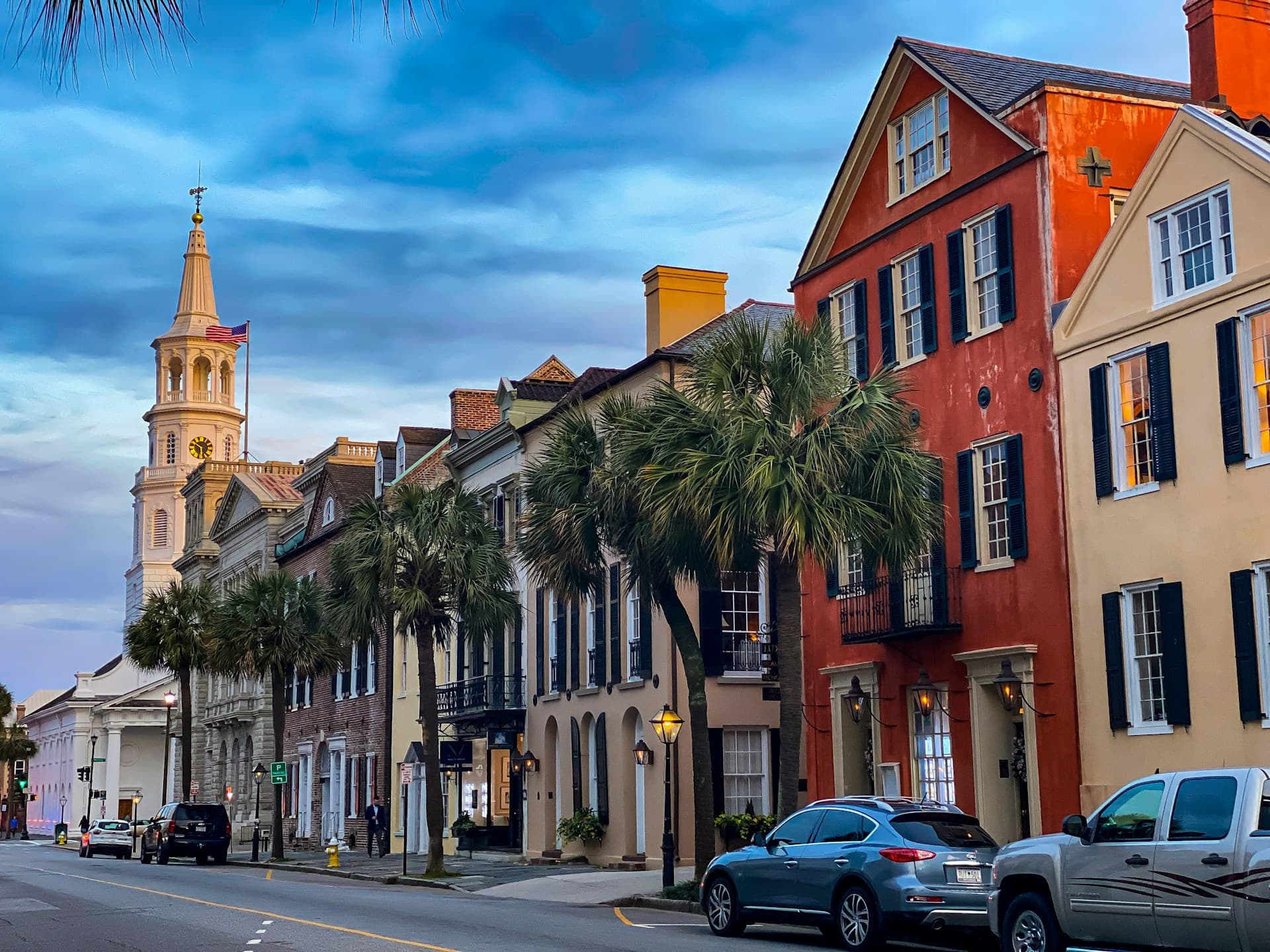
Wild Dunes is a 1,600-acre gated resort community on the northern tip of Isle of Palms, South Carolina, with approximately 2,300 homes across 25+ sub-communities and regime associations, two Tom Fazio golf courses, and direct beach access. Built in the mid-1970s and rebuilt after Hurricane Hugo, Wild Dunes operates under a split ownership model: you own the real estate, but the resort amenities belong to someone else — and that distinction shapes everything about buying here.
The recurring cost of ownership runs well beyond the mortgage. Expect regime fees that vary by sub-community from roughly $225 to $1,200 per month, mandatory flood insurance across the entire resort, and real special-assessment risk on older oceanfront buildings. Getting those numbers right before closing separates an enjoyable second home from a carrying-cost surprise.
Quick Facts
- Location: Northern Isle of Palms, SC 29451
- Total homes: ~2,300 across 25+ sub-communities
- Home styles: Single-family homes, oceanfront condos, villas, townhomes
- Price range: $500K – $5M+
- Median sale price: $1,287,500 (down ~20% YoY)
- Price per sqft: $777 (vs. $900 IOP average)
- Days on market: 56 (down from 93 YoY)
- HOA (master): $983/year (2026)
- Golf: Two Tom Fazio courses (Links Course, Harbor Course)
- Tennis: 17 Har-Tru courts + pickleball
- Security: 24-hour staffed gated entrance
- Flood zone: 100% SFHA (60% VE, 40% AE)
- Schools: Sullivan's Island Elementary → Laing Middle → Wando High
- Walk score: 20 (car-dependent)
What makes Wild Dunes different from other Isle of Palms neighborhoods?
Wild Dunes operates under a fundamentally different model than a typical beach community — and buyers who don't understand this distinction before making an offer get surprised at the closing table.
Three Owners, One Address: Why the Lowe/Dart/Hyatt/HOA Split Matters to You
Most buyers assume that a gated resort community works like this: you buy, the HOA runs everything, and your dues cover amenities. Wild Dunes works nothing like that.
The community has three separate power centers, and none of them answer to the others:
The Resort Owner (Lowe + Dart Interests) owns the two golf courses, the tennis center, the resort pools, the fitness center, the Sweetgrass Inn, and the Boardwalk Inn. Lowe, a Los Angeles-based real estate firm, acquired Wild Dunes in 1990 after Hurricane Hugo devastated the original development. Dart Interests joined as a capital partner in 2018, funding projects like the $9.5 million Harbor Course renovation completed in late 2024.
The Resort Operator (Destination by Hyatt) manages the day-to-day hotel operations, the club membership program, and rental management. Lowe originally owned the management company but sold it to Hyatt in 2018. So the brand is Hyatt, but the real estate belongs to Lowe/Dart.
The HOA (Wild Dunes Community Association) manages the private roads, security gates, common landscaping, and the Property Owners Beach House. The WDCA collects $983/year (2026) from every property owner — but it has zero control over the golf courses, the pools, or the club.
Why this matters: when you buy in Wild Dunes, the HOA can't change the club membership pricing, can't grant you pool access, and can't prevent the resort owner from altering amenity policies. The $50,000 golf initiation fee is set by Lowe/Dart, not by your neighbors. The resort operates commercially to maximize profit from hotels and public-play golf — priorities that sometimes align with homeowner interests and sometimes don't.
The flip side: this structure means your HOA fee is low compared to communities that fund their own amenities. You're not subsidizing golf course maintenance if you never play golf. It's a "pay for what you use" model — but the price of using is steep.
18 Sub-Communities, 18 Different Experiences
Wild Dunes is not one neighborhood. It's a collection of distinct regimes, each with its own fee structure, amenities, character, and carrying costs. Buying a Shipwatch condo and buying a Waterway Island home are both "buying in Wild Dunes" — but the financial reality is entirely different.
Oceanfront condos and villas: Shipwatch, Port O'Call, Ocean Club, Mariner's Walk, Summerhouse, Seascape Villas — these are the high-density, regime-heavy properties where monthly fees run roughly $500–$1,200 and insurance assessments can add thousands more annually.
Beachfront and resort-adjacent: Grand Pavilion, Beach Club Villas, Tidewater, Village at Wild Dunes (Sweetgrass) — these range from relatively low-fee townhome sections to hotel-style residences with premium regime costs.
Golf course and interior: Fairway Dunes, Racquet Club Villas, Seagrove — mid-range properties with moderate fees and golf or lagoon views.
Single-family enclaves: Waterway Island, Pelican Bay, Beachwood East and West, Morgan Creek Harbor — these carry the lowest regime overhead, with some sections paying only the master WDCA fee and nothing else.
The regime you buy into determines more about your annual carrying costs than the purchase price itself. A detailed fee breakdown is in the HOA section below.
How much do homes cost in Wild Dunes?
Homes in Wild Dunes range from approximately $500,000 for entry-level condos to over $5 million for premium oceanfront single-family properties, with median sale prices currently at $1,287,500 — roughly $485,000 below the broader Isle of Palms median.
$500K Condo to $5M+ Oceanfront: What Each Price Tier Buys
Premium ($2M – $5M+): Oceanfront single-family homes in Grand Pavilion, Ocean Point, and Waterway Island. Direct beach or waterway views, newer construction, premium lot sizes. The top of the market exceeds $7M for the best oceanfront parcels.
Upper-range ($1.5M – $2.5M): Oceanfront condos in Ocean Club, Summerhouse, and Mariner's Walk — high-rise and mid-rise units with direct ocean views and elevator access. Also includes premium golf-course or marsh-front single-family homes with quality finishes.
Mid-range ($1M – $1.8M): Interior single-family homes, golf-adjacent properties, and well-appointed condos in Seagrove or Grand Pavilion. This is where most market activity occurs.
Entry level ($500K – $1.2M): Older condos and villas in Port O'Call, Seagrove, and Fairway Dunes. Smaller villas and older single-family homes on interior lots. Prices at this level are attractive, but regime fees and insurance assessments can make the carrying costs disproportionate to the purchase price.
Down 20% While IOP Climbs 18%: Reading the Current Numbers
The Wild Dunes market has undergone a notable correction. The median sale price of $1,287,500 represents approximately a 20% decline year-over-year, while the broader Isle of Palms market has appreciated roughly 18% to a $1,772,500 median. That's a 38-percentage-point divergence — and it's not random.
Days on market have actually improved from 93 to 56, and homes are selling at about 95.6% of list price, which suggests the market is finding its new price level rather than freezing up. Inventory sits at roughly 60 active listings.
The price-per-square-foot of $777 versus IOP's $900 creates a substantial per-foot discount. Whether that discount is a buying opportunity or a permanent repricing depends on the factors discussed in the market dynamics section below.
What Ownership Really Costs: Three Scenarios Before You Even Pay the Mortgage
The purchase price is only part of the equation at Wild Dunes. Here's what realistic annual carrying costs look like for three common buyer profiles:
| Expense | $750K Condo (VE, STR) | $1.5M SFH (AE, 2nd Home) | $3M Oceanfront (VE, Primary) |
|---|---|---|---|
| WDCA master HOA | ~$983 | ~$983 | ~$983 |
| Regime fees | ~$7,200 | ~$2,700 | ~$1,040 |
| Regime insurance (billed separately) | ~$3,000 | — | — |
| Property taxes | ~$9,750 (6%) | ~$19,500 (6%) | ~$16,500 (4%) |
| Homeowners/HO-6 insurance | ~$1,200 | ~$3,000 | ~$4,000 |
| Wind/hail | (in regime) | ~$5,500 | ~$8,000 |
| Flood (NFIP + excess) | ~$750 (contents only) | ~$3,500 | ~$8,000 |
| Club membership (amortized) | — | ~$2,700 (Swim) | ~$12,600 (Signature) |
| STR license & WDCA access fee | ~$1,150 | — | — |
| Total before mortgage | ~$23,800/year | ~$37,650/year | ~$50,950/year |
These numbers are estimates based on mid-range assumptions within each zone and property type. Your specific costs will vary based on your regime, elevation, insurance carrier, and tax assessment. But the pattern is clear: annual carrying costs of $25,000–$50,000+ before your mortgage payment is a structural reality at Wild Dunes.
Selling in Wild Dunes?
We track Wild Dunes inventory, buyer demand, and pricing shifts. Get a confidential valuation and a practical strategy for timing, prep, and pricing.
What is it like to live in Wild Dunes?
Living in Wild Dunes means embracing a gated resort environment with genuine beach lifestyle — and accepting the cost structure that comes with it.
What Your $983/Year HOA Actually Buys (And What It Doesn't)
Your WDCA assessment covers:
- 24-hour staffed security gates (Main Gate and Palm Gate)
- Private road maintenance throughout the community
- Common area landscaping and lagoon maintenance
- The Property Owners Beach House — a private facility with beach access, parking, restrooms, and event space (no pool)
- Community beach paths and bike trails
Your WDCA assessment does NOT cover:
- Resort pools (including the Grand Pavilion pool complex)
- Fitness center
- Golf (neither course)
- Tennis and pickleball courts
- Resort dining or spa
Single-family home owners without a club membership get the gated community, the beach house, and the trails. That's it. There is no community pool accessible without club membership unless your specific condo regime has its own pool — and you can only use your regime's pool, not any other building's.
$50,000 to Swim: What Club Membership Actually Costs and How It Works
The Wild Dunes Club is a non-equity private club, meaning members hold no ownership stake and receive no refund upon resignation or home sale. The membership does not transfer with the property — when a Wild Dunes home sells, the new buyer starts from zero with a new initiation fee at prevailing rates.
Current membership tiers (2025):
| Tier | Initiation (Non-Refundable) | Monthly Dues | What You Get |
|---|---|---|---|
| Signature (Golf) | $50,000 | $637 | Unlimited golf (both courses), tennis, pickleball, resort pools, 20% dining/retail discount |
| Racquets | $10,000 | $336 | Unlimited tennis and pickleball, resort pool access |
| Swim (Social) | $10,000 | $139 | Resort pool access, beach services |
Add $34/month for fitness center access at any tier. Signature membership requires property ownership in the Charleston tri-county area.
The Young Executive option: Buyers under 45 can defer Signature initiation — 25% at signing, 25% at age 35, remaining 50% at age 45 — with reduced dues until full fees kick in.
For comparison: Kiawah Island Club charges $150,000 initiation (50% refundable), and Seabrook Island charges $75,000 — but both are equity or mandatory memberships that transfer with the property. Wild Dunes' $50,000 is cheaper upfront but it's a pure consumption expense that evaporates when you sell.
No food and beverage minimums, and no capital assessments are currently charged to club members — the resort owner (Lowe/Dart) funds capital improvements directly.
Short-Term Rentals: Allowed, But the Pet Ban Changes the Math
Wild Dunes permits rentals under 30 days, making it investor-friendlier than many gated communities. However, three friction points affect returns:
The $100 STR access fee: The WDCA charges a $100/year STR access fee, added to the annual master assessment for any property used for short-term rental. It's a flat annual line item, not per-booking — but it's a recurring carrying cost STR owners need to budget alongside city license fees.
The pet prohibition: No pets are allowed in short-term rentals (≤30 days) within Wild Dunes. Long-term tenants on 30+ day stays may bring pets with advance notice to management, but the STR-side ban still drives the economics. This is the single biggest competitive disadvantage versus non-gated IOP properties. The drive-to vacation market from Atlanta, Charlotte, and Greenville is heavily pet-centric — banning pets in weekly rentals eliminates a large, high-spending segment of the market and suppresses both occupancy and nightly rates.
The Sportscard system: If you rent your property, your guests can't access the resort pools or tennis courts unless you purchase a Sportscard — an annual pass that extends designated amenity access to renters. Without it, your vacation rental guests are limited to the beach and the Property Owners Beach House. Properties marketed with Sportscard access generally achieve higher occupancy and nightly rates than those without.
City requirements: Isle of Palms requires a short-term rental business license (fees based on gross rental income — $450 base plus $4.60 per $1,000 of revenue), a 24/7 local contact within one hour, occupancy limits of 2 per bedroom plus 2 (maximum 12), and a posted notice in the rental unit.
Considering Wild Dunes?
We can help you compare sections, flood exposure, schools, and the tradeoffs that do not show up in the listing photos.
How far is Wild Dunes from downtown Charleston?
Wild Dunes sits at the northern tip of Isle of Palms, approximately 25–35 minutes from downtown Charleston off-peak via the Isle of Palms Connector to Mount Pleasant.
- Downtown Charleston: 25–35 min off-peak / 35–50 min rush hour
- Charleston International Airport: 30–40 min
- Mount Pleasant (Towne Centre): 15–20 min
- Sullivan's Island: 15 min
The IOP Connector provides direct access to Mount Pleasant without routing through the historic district, putting Costco, Target, Whole Foods, and medical facilities closer than most buyers expect. The community is car-dependent (walk score 20) — you'll drive for groceries, restaurants, and everything beyond the gates.
What schools serve Wild Dunes?
Wild Dunes is zoned for Charleston County School District:
- Sullivan's Island Elementary (PK–5): Niche A rating, 10/10 GreatSchools. Palmetto Gold Award winner. Partial magnet status with a math and science focus. 15:1 student-teacher ratio, 509 students. Serves both Isle of Palms and Sullivan's Island students.
- Laing Middle School (6–8): Niche A rating, 9/10 GreatSchools. 18:1 student-teacher ratio. Located in Mount Pleasant.
- Wando High School (9–12): Niche A rating, 10/10 GreatSchools. Ranked #1,034 nationally. Comprehensive college prep curriculum. Located in Mount Pleasant.
The Full Fee Stack: WDCA, Regime Fees, and the Layers Most Buyers Miss
Understanding Wild Dunes' fee structure is non-negotiable before making an offer. There are three layers, and the second one is where most surprises hide.
Layer 1: The $983/Year Master Assessment Everyone Pays
The WDCA assessment applies to every property owner — $983/year for dwellings in 2026, $492/year for undeveloped lots. A 1% Real Estate Transfer Fee (RETF) of the sales price is collected at closing.
This covers security, roads, common landscaping, and the Property Owners Beach House. It does NOT fund any resort amenity.
Layer 2: Regime Fees That Range From $225/Month to $1,200/Month
Every condo and villa in Wild Dunes belongs to a sub-community "regime" with its own board, its own budget, and its own fees on top of the WDCA master. Single-family sections like Beachwood East typically have no regime — owners pay only the WDCA fee and handle their own exterior maintenance and insurance.
Regime fees by sub-community (2024–2025 estimates):
| Sub-Community | Type | Monthly Fee | Key Notes |
|---|---|---|---|
| Village at Wild Dunes | Condo/Hotel-style | ~$1,200 | Hotel-grade amenities and services |
| Seascape Villas | Condo (oceanfront) | $1,050–$1,189 | Large units, direct ocean exposure; $250 HOA processing fee at closing |
| Ocean Club | Condo (high-rise) | $850–$1,180 | Elevator building, 1% transfer fee to regime + 1% to WDCA. ~$250,000/unit exterior-envelope special assessment (balconies, impact windows/doors) active in 2026 |
| Summerhouse | Condo (high-rise) | $780–$1,060 | ~$19,000/unit 2024–2025 structural renovation assessment |
| Tidewater | Condo | ~$600 | — |
| Shipwatch Villas | Condo | $525–$704 | Insurance billed separately (~$2,400–$3,700/year) |
| Fairway Dunes | Villa | ~$535 | Near Links Course |
| Racquet Club | Villa | ~$500 | Near tennis center |
| Mariner's Walk | Condo (oceanfront) | ~$483 | 0.5% transfer fee |
| Port O'Call | Condo | $595 base / $676 all-in | 1BR rate as of 2026. Covers exterior, pool, insurance, cable, water, sewer, trash. Always verify current budget at resale package |
| Seagrove | Condo | $284–$565 | Varies dramatically by unit size (1BR–3BR) |
| Pelican Bay | SFH (with pool) | ~$225 | Community pool, lowest regime fee |
| Grand Pavilion | Townhome | ~$260/quarter | Low HOA; units have smaller common areas |
| Waterway Island | SFH (luxury) | ~$689/quarter | Gated enclave, covers gate and landscaping |
| Beachwood East/West | SFH | WDCA only | No regime — owner handles everything |
The hidden insurance line item: Many regimes — Shipwatch is the clearest example — bill exterior insurance separately from the monthly operating dues. The "monthly fee" you see in a listing description may not include $2,400–$3,700/year in annual insurance charges. Always ask for the regime's full annual budget, not just the monthly figure.
Special assessments are real and large. Summerhouse owners faced a ~$19,000/unit assessment in 2024–2025 for structural envelope and steel-beam repair. Ocean Club owners are absorbing a ~$250,000/unit exterior-envelope renovation (rebuilt balconies and railings, impact-resistant windows and doors), active as of March 2026. Older oceanfront buildings routinely face six-figure assessments for structural waterproofing and renovation work — Seascape owners should verify any current special assessments in the resale package. Before purchasing any condo, request the regime's reserve study, pending litigation report, and last three years of meeting minutes.
Layer 3: Club Membership and the Sportscard
As covered above, club membership is optional but costs $10,000–$50,000 upfront plus $139–$637/month. For rental owners, the Sportscard system provides guest access to designated amenities. Budget for this if you plan to rent — properties with Sportscard access command measurably higher nightly rates.
100% Flood Zone: What Insurance Actually Costs at Wild Dunes
Every property in Wild Dunes — without exception — is in a FEMA Special Flood Hazard Area. Flood insurance is mandatory for any federally-backed mortgage, and the costs are substantial.
60% VE, 40% AE, Zero Minimal Risk
The flood zone distribution across Wild Dunes:
- VE Zone (Coastal High Hazard): ~60% of the community — the entire oceanfront, northern interior near the Links Course, and most of the harbor/waterway side. Base Flood Elevations of 12–14 feet. VE designation means wave action on top of storm surge — stricter building codes (elevated foundations, breakaway walls).
- AE Zone (High Risk): ~40% — the southern oceanfront near the Village, interior south, and the southern harbor side. BFE of 10–11 feet.
The zone pattern is counterintuitive: the Intracoastal Waterway (harbor) side has higher BFE (13–14 feet) than parts of the oceanfront (12 feet), reflecting FEMA's wave action modeling for that shoreline. Don't assume "harbor side = safer."
NFIP Caps, Private Carriers, and the $250,000 Problem
NFIP (National Flood Insurance Program):
- VE zone (12–14 ft BFE): $4,000–$9,000+/year for maximum coverage ($250K building / $100K contents)
- AE zone (10–11 ft BFE): $1,200–$4,500/year for maximum coverage
The critical gap: NFIP caps building coverage at $250,000. For a $1.5 million home, that leaves over $1.25 million uninsured. Contents coverage caps at $100,000 with actual cash value (depreciated) valuation — your $5,000 sofa gets reimbursed at its garage-sale value. Loss of use (temporary housing while your home is unlivable) is not covered at all.
Private flood insurance from carriers like Wright National, Neptune, and Aon Edge can extend limits to $2–4 million building coverage, offer replacement cost valuation, and include loss-of-use coverage. Premiums often run 20–40% below NFIP full-risk rates for elevated, post-FIRM homes. The tradeoff: private carriers can non-renew, and if you lapse and return to NFIP, you may lose any rate subsidies.
Excess flood policies are essential for any Wild Dunes property valued over $500K. Budget $1,500–$3,000/year for $1M in excess building coverage.
Wind and Hail: The Second Insurance Bill Nobody Expects
Standard homeowners policies in coastal South Carolina exclude wind and hail damage. You need a separate policy, typically through:
- Private market carriers — competitive pricing when available
- SC Wind & Hail Underwriting Association (the "Wind Pool") — the insurer of last resort, capped at $1.3 million for residential coverage
For homes valued over $1.3 million, you'll need an "excess wind" policy from the private market on top of the Wind Pool policy.
Deductibles are percentage-based, not flat dollar. Named storm deductibles of 2–5% of insured value are standard. On a $1.5 million home: a 2% deductible means $30,000 out of pocket; a 5% deductible means $75,000 before insurance pays a cent. Budget liquid reserves accordingly.
Wind/hail premiums: $4,000–$7,000/year for a $1.5M home; $8,000+ for oceanfront properties with higher exposure.
Risk Rating 2.0: Why New Buyers Pay More Than Previous Owners Did
FEMA's Risk Rating 2.0, fully implemented by 2022, fundamentally changed how flood insurance is priced. Rates are now calculated using individual property attributes — distance to water, elevation, replacement cost, foundation type — rather than just the flood zone on the map.
For Wild Dunes buyers, two implications matter:
No more grandfathering. Under the old system, properties could maintain lower "grandfathered" rates from earlier FIRM maps. Risk Rating 2.0 eliminated this. Properties that were grandfathered before 2021 are on a "glide path" with 18% annual increases until they reach the actuarial rate. New buyers starting an NFIP policy get the full Risk Rating 2.0 price from day one.
Elevation matters more than zone. Two VE-zone properties on the same street can have very different premiums based on their first-floor height, foundation type, and replacement cost. Always get an elevation certificate and multiple flood insurance quotes — the spread between NFIP and private market can be thousands per year.
IOP's CRS discount: The City of Isle of Palms participates in FEMA's Community Rating System with a 25% discount on NFIP premiums — a meaningful savings that not all coastal communities offer.
Total Annual Insurance by Property Type
| Property | Flood (NFIP + Excess) | Wind/Hail | Homeowners/HO-6 | Approximate Total |
|---|---|---|---|---|
| $750K condo, VE zone | ~$750 (contents only; building in regime master) | (in regime) | ~$1,200 | ~$1,950 owner-paid + regime insurance costs |
| $1.5M SFH, AE zone | ~$3,500 | ~$5,500 | ~$3,000 | ~$12,000/year |
| $3M SFH, VE zone (oceanfront) | ~$8,000 | ~$8,000+ | ~$4,000 | ~$20,000+/year |
For condo buyers: Your regime fee likely includes the building's master flood policy (RCBAP) and master wind/hail policy — but the master policy deductible can be enormous. Ask specifically: "What is the master policy wind deductible?" If the answer is 5% on a $20 million building, that's a $1 million deductible. If the reserve fund can't cover it after a storm, every unit owner gets a special assessment. This is not hypothetical — it happens regularly on barrier islands.
Property Taxes: The 4% vs. 6% Assessment That Doubles Your Bill
South Carolina's property tax system creates a massive cost differential between primary residents and second-home or investment owners — and Wild Dunes, where a large percentage of buyers are purchasing second homes, feels this acutely.
How it works: SC assesses primary residences at 4% of fair market value; second homes, investment properties, and properties held in LLCs are assessed at 6%. Primary residents are also exempt from school operating taxes, which are a major component of the total millage rate.
Real dollar impact on a $1 million property:
| Primary Residence (4%) | Second Home / Investment (6%) | |
|---|---|---|
| Assessment ratio | 4% | 6% |
| Assessed value | $40,000 | $60,000 |
| School tax exemption | Yes | No |
| Estimated annual tax | ~$4,500–$5,500 | ~$14,000–$16,000 |
| Difference | ~$10,000/year more |
On a $2 million property, the difference approaches $20,000/year. This is not a rounding error — it's a foundational cost that every second-home buyer needs in their budget.
Point-of-sale reassessment: South Carolina reassesses property to market value at the time of purchase. If the previous owner bought at $600,000 and you buy at $1.2 million, your tax bill resets to the $1.2 million assessed value. Always check the current tax bill on a listing and recalculate based on your purchase price.
Why Wild Dunes Is Down 20% While IOP Is Up 18%
This divergence is the most important question for anyone considering Wild Dunes today. Understanding it requires both current analysis and historical context.
The Fee Stack Makes Buyers Do the Math Differently
The combined annual carrying costs — WDCA + regime fees + insurance + property taxes + optional club membership — push the total non-mortgage cost of a mid-range Wild Dunes property to $25,000–$40,000+ per year. In a higher interest rate environment, buyers run the numbers more carefully, and the "all-in" cost of Wild Dunes ownership creates resistance that didn't exist when rates were 3%.
Compare this to a non-gated IOP property at the same price: no WDCA fee, no regime fees, same flood zone, same tax rate, same insurance, no club initiation. The annual premium for living inside the gate is roughly $8,000–$15,000/year in recurring fees — plus $7,500–$15,000 in transfer fees at closing. That math is pushing price-sensitive buyers outside the gate.
The Condo and Villa Correction
Wild Dunes has disproportionately heavy condo and villa inventory — and the national coastal condo market is undergoing a correction driven by surging insurance premiums and deferred maintenance. Buildings from the 1980s and 1990s need major structural work, and the special assessments are severe. When a building announces a $200,000-per-unit assessment, the effective sale price of those units drops by roughly that amount. This pulls the median down hard.
The Pet Ban and STR Friction
For investment buyers, the pet prohibition in short-term rentals is a genuine competitive disadvantage. Pet-friendly rentals command higher occupancy and nightly rates in the Charleston beach market. When investors can buy on the non-gated side of IOP and rent to guests with dogs at higher returns, Wild Dunes loses a chunk of buyer demand. The $100/year STR access fee adds further friction.
The Historical Pattern: Wild Dunes Leads Corrections and Lags Recoveries
This isn't the first time Wild Dunes has diverged from IOP:
Post-Hurricane Hugo (1989): Wild Dunes, located on the island's most geologically dynamic tip, suffered catastrophic damage. Property values remained depressed longer than stable sections of IOP, with the resort's recovery tied to the rebuild timeline of its amenities rather than the housing stock alone.
The 2008 Financial Crisis: Wild Dunes prices dropped approximately 50% from peak to trough, with the bottom not arriving until 2011–2012. The broader IOP residential market (more primary-residence owners, less investor-heavy) showed more stability. Resort community inventory, dominated by second homes and investment units, froze as discretionary buyers pulled back.
The pattern: Wild Dunes behaves like a discretionary luxury asset, not primary housing. It rises faster in speculative booms (the COVID-era surge) and corrects harder in downturns. The current ~20% correction is consistent with this historical behavior.
Buying Opportunity or Permanent Discount? An Honest Analysis
The case for cyclical opportunity: Current prices reflect peak fear about condo assessments and insurance costs. Buyers who purchase after assessments are paid are getting renovated buildings at distressed prices. For primary-residence buyers who don't need rental income, the lifestyle arbitrage is real — same beach, same gate, same schools, at a meaningful discount to non-gated IOP. The Harbor Course renovation signals that Lowe/Dart is investing for the long term.
The case for structural discount: Coastal condo insurance costs are unlikely to return to 2019 levels — that's a permanent increase in carrying costs. The unbundled amenity model will always create friction versus communities where pool and tennis are included. The pet ban in STRs is set by the WDCA and would require a governance change to lift. And as long as the fee stack exceeds $25,000/year before mortgage, Wild Dunes will trade at a discount to fee-simple IOP properties.
What would close the gap: Removal of the pet restriction for STRs, stabilization of condo insurance and regime assessments, or a structural change in how club access is offered (bundling with ownership). Absent one of these, the discount likely persists — though its magnitude may narrow as post-assessment buildings attract value buyers.
How does Wild Dunes compare to other SC beach resort communities?
| Factor | Wild Dunes | Kiawah Island | Seabrook Island |
|---|---|---|---|
| Price range | $500K–$5M+ | $1M–$10M+ | $700K–$4M+ |
| Gated | Yes | Yes | Yes |
| Golf initiation | $50K (non-refundable, non-transferable) | $150K (50% refundable, equity) | $75K (mandatory for owners) |
| Amenities bundled? | No — separate club | Yes — equity membership | Yes — mandatory membership |
| Membership transfers with sale? | No — new buyer pays full initiation | Yes — attached to property | Yes — attached to property |
| STR allowed? | Yes (≤30 days, no pets in STRs) | Limited | Weekly minimums common |
| Master HOA | $983/year + regime | Bundled with club | Bundled with club |
| Flood zone coverage | 100% SFHA | Mostly SFHA | Partially SFHA |
| Distance to Charleston | 25–35 min | 45–60 min | 35–50 min |
| Annual carrying costs (est.) | $24K–$51K+ | $40K–$80K+ | $30K–$50K+ |
Wild Dunes is the "accessible luxury" entry point. The initiation fee is the lowest, the HOA is the lowest, and the proximity to Charleston is the closest. The tradeoff: your membership is a consumption expense that evaporates when you sell, not an asset that transfers. At Kiawah, half your $150K initiation comes back; at Wild Dunes, zero of your $50K does.
Is Wild Dunes a good place to live?
Wild Dunes is the right choice if:
- You want gated beach and golf access without Kiawah's price tag
- You're a primary resident or second-home owner who values the lifestyle over investment returns
- You appreciate 24-hour security, maintained common areas, and private beach access
- You're comfortable with the fee stack and see club membership as lifestyle spending, not wasted money
- Proximity to Charleston (25–35 minutes) matters for work, dining, or airport access
Consider elsewhere if:
- You're buying primarily for STR cash flow — the pet ban, the WDCA STR access fee, and high carrying costs make positive returns difficult
- You expect resort amenities to be included with ownership — they're not, and the $50,000 golf initiation is non-negotiable
- You want walkability — Wild Dunes is car-dependent for everything beyond the beach
- You're buying a 1980s-era condo without thoroughly reviewing the regime's reserve study and pending assessments — six-figure special assessments are not hypothetical here
- You want minimal carrying costs — a comparable non-gated IOP home saves $8,000–$15,000/year in recurring fees
Nearby Neighborhoods
- Sullivan's Island — Historic island neighbor across Breach Inlet, same school zone, no-gate residential character, higher price floor but no resort fees or regime overhead
- Isle of Palms (non-gated) — The rest of the island outside Wild Dunes' gates offers the same beach, same flood zones, and same schools without WDCA, regime, or club fees — often at higher per-sqft prices but lower annual carrying costs
- Dewees Island — Private, car-free barrier island accessible only by boat, a fundamentally different approach to island living for buyers seeking seclusion over resort amenities
FAQ
How much do homes cost in Wild Dunes?
Homes range from approximately $500,000 for entry-level condos and villas to over $5 million for premium oceanfront single-family properties. The median sale price is $1,287,500, with most single-family activity in the $1M–$1.8M range and condos spanning $500K–$2M depending on building, location, and condition.
Does owning in Wild Dunes include club membership?
No. Club membership is completely separate from property ownership. The Signature (golf) membership requires a $50,000 non-refundable initiation fee plus $637/month in dues. The Swim tier starts at $10,000 plus $139/month. The club is owned by Lowe and Dart Interests, not the HOA. Memberships do not transfer when properties sell — new buyers pay full initiation at prevailing rates.
Is Wild Dunes in a flood zone?
Yes — 100% of Wild Dunes is in a FEMA Special Flood Hazard Area. Approximately 60% is VE zone (coastal high hazard, 12–14 ft BFE) and 40% is AE zone (10–11 ft BFE). There is no Zone X (minimal risk) property anywhere in the community. Flood insurance is mandatory with any federally-backed mortgage. Budget $1,200–$9,000+ annually for flood coverage alone, depending on zone, elevation, and property value.
What is the WDCA short-term rental access fee?
The WDCA charges a $100/year STR access fee on any property used for short-term rental (under 30 days). It's added to the annual master assessment, not billed per booking, and is separate from Isle of Palms business license fees.
Can you have pets in Wild Dunes?
Owners and long-term residents can have pets. Pets are prohibited in short-term rentals of 30 days or less — STR guests cannot bring pets under any circumstances. Long-term guests staying 30+ days may bring pets with advance notice to management. This is a WDCA rule, not a city ordinance, and contractors/vendors/employees may not bring pets at all. For investors, the STR pet ban eliminates the pet-friendly weekly-rental segment and is one of the primary factors suppressing Wild Dunes rental returns relative to non-gated IOP.
What happens when I sell — does my club membership transfer?
No. Wild Dunes Club memberships are non-transferable and non-refundable. When you sell your property, your membership terminates. The buyer must apply for a new membership at current rates ($50,000 initiation for Signature). This is fundamentally different from Kiawah or Seabrook, where memberships are attached to the property. Budget the initiation fee as a sunk cost of ownership, not a recoverable asset.